

Interactive Museum
The Living Loom
Step into our Dharmavaram ateliers. Witness the rhythm, precision, and devotion woven into every masterpiece.
A Symphony of 10,000 Threads
The creation of a true Kanjivaram is not an industrial process; it is a spiritual practice. Our master weavers orchestrate thousands of silk threads, pure silver, and gold zari on traditional pit looms, bringing ancient motifs to life without the intervention of electricity or modern machinery.
01.
Vairaoosi
Vairaoosi is one of the oldest weaving technique in the history of Kanjeevaram weaves, in Vairaoosi “Vairam” means Daimond and Oosi means “Needle”. The way of projecting thin Zari line in the form of Daimond cut and as if thread is inserted with needle in between silk warp threads is called “Vairaoosi” and hence the name has been given. In this special edition of our “Loom stories Vlog” we clearly showcase a classic Vairaoosi saree along with the respective handloom where this saree is being woven and showcase the weaving technique explaining the complexity and beauty of the weave. Placing the zari threads in equal geometry proportions in between silk warp threads and balancing 65mtrs of both silk and zari thread is the most critical part of the weave which is clearly showcased in this vlog

02.
Thapet Handlooms
Thapet Handlooms are the oldest weaving looms in Kanjeevaram weaves with a history of over 200 years, its a beautiful art form which involves manual process at each every step right from sketching the design in the graph grid to preparing the wooden sticks (Thapet Lathis). With a great amount of research we have revived this art form and in this vlog we show the complete design and weave journey of a Kanjeevaram saree in “Thapet Handloom” and how we are using this art form to recreate older Kanjeevaram sarees

03.
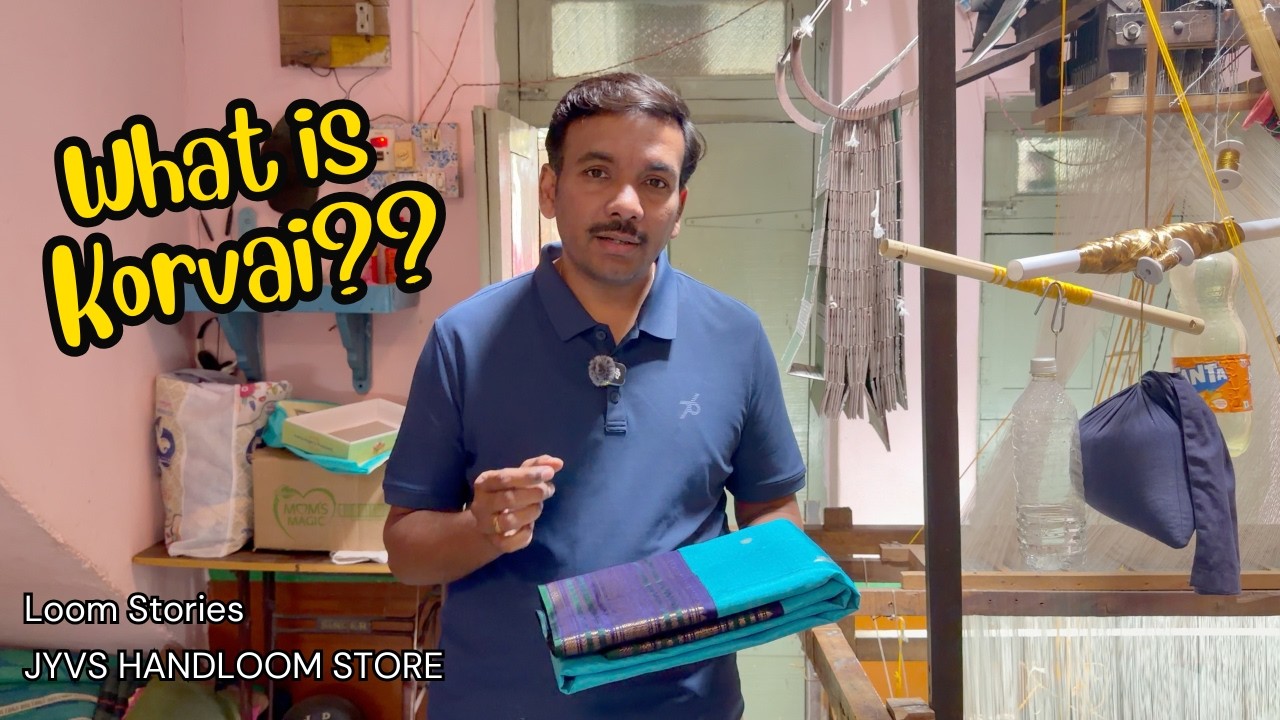
What is Korvai?
Korvai is one of the oldest weaving techniques in Kanjeevaram. “Korvai” means attaching two different parts, which is aptly seen in Kanjeevaram Korvai sarees. It involves joining the body portion weft to the border portion weft, resulting in a bright colour-to-colour contrast in the sarees. This is achieved by maintaining independent wefts for the body and the border portions. In this video, we try to explain the process of attaching each and every thread, showcasing the complexity of this weave process.
Watch the Masters at Work
Experience the hypnotic clack-clack of the handloom.